Designing Resilient Buildings for Long-term Performance
12 Nov 2025
A Focused Framework Helps Owners, Architects, and Manufacturers Design Buildings that Perform under Pressure, Recover Faster, and Last Longer
Building codes establish minimum standards for structural strength, fire protection, and life safety. These requirements have made buildings safer, but they were never designed to guarantee long-term performance during disruption.
Climate risks are increasing faster than code cycles can adapt. Hurricanes are stronger, wildfires are spreading farther, and heat waves are lasting longer. This growing gap between compliance and performance exposes vulnerabilities in how buildings are designed and operated.
Even code-compliant buildings can fail to operate when hazards strike. Schools may close, hospitals may lose power, and businesses may remain shuttered for weeks. Resilient design bridges this gap by creating buildings that can withstand disruption, continue to function, and recover more quickly.
The Gap Between Compliance and Performance
Codes evolve in response to past failures, not future risks. They set a baseline for safety but not for continuity. True resilience begins where compliance ends, focusing on performance both during and after a hazard event.
The National Institute of Building Sciences found that every dollar invested in hazard mitigation saves six dollars or more in recovery costs. Upgrading roof connections, installing impact-resistant glazing, and elevating mechanical systems can help prevent catastrophic loss. These design decisions also protect building occupants, preserve operations, and reduce recovery time.
Designing for Resilience
Resilient design shifts the focus from meeting code to maintaining function when systems fail. This approach emphasizes durability, adaptability, and long-term performance.
- Building Enclosures: The envelope is the first defense against air, water, and heat. Stronger barriers, reinforced roofs, impact glazing, and waterproofing reduce damage and downtime. Facilities built with these measures consistently outperform those limited to code minimums. These same systems improve energy efficiency, linking resilience with sustainability.
- Reliable Power: Reliable energy supply is central to resilience. On-site renewables and battery storage allow critical operations to continue during outages. Microgrids provide self-sufficiency, while elevating and floodproofing electrical equipment reduces damage risk. Buildings with protected power systems have remained operational even when surrounding areas lost power.
- Passive Survivability: Resilient buildings remain safe when utilities fail. Natural ventilation, daylighting, enhanced insulation with low air infiltration, and materials that store heat help maintain livable conditions without mechanical systems. During wildfire smoke events, schools with passive cooling and advanced filtration continued operating while others must close.
- Flexible and Redundant Systems: Systems designed for flexibility recover faster. Redundant power and plumbing circuits, modular equipment layouts, and smart monitoring enable partial operation even when one component fails. Buildings with these systems experience fewer interruptions and lower repair costs.
- Community Integration: Resilience extends beyond the building itself. Schools can function as emergency shelters, healthcare centers can continue to provide care during blackouts, and community facilities and grocery stores can serve as relief coordination hubs. When buildings are designed to integrate with public infrastructure, they strengthen recovery across entire communities.
Market and Regulatory Drivers
Resilience is being formalized across policy, standards, and investment frameworks. Regulations and rating systems now treat hazard preparedness as a measurable performance requirement.
- Global and Federal Frameworks: Climate disclosure frameworks, such as the Task Force on Climate-Related Financial Disclosures (TCFD) and the European Union's Corporate Sustainability Reporting Directive (CSRD), require organizations to assess and report on how climate hazards impact their assets and operations. These frameworks are now influencing corporate reporting in the United States, where investors expect clear evidence of climate risk management and resilience planning.
- State Legislation: California Senate Bill 261 requires companies with at least $500 million in annual revenue doing business in the state to disclose climate-related financial risks. Other states are developing similar legislation, expanding accountability across industries and encouraging proactive investment in hazard mitigation.
- Standards and Certification Systems: ASTM International's Standard Guide for Property Resilience Assessment (E3429-24) provides a standardized method for evaluating site-specific hazards such as flooding, wildfire, and heat. It helps owners integrate resilience planning into risk management, lending, and insurance processes. LEED v5 adds a Climate Resilience Assessment prerequisite for certification, requiring projects to evaluate climate risks and define mitigation strategies. This update makes resilience a core element of sustainable design rather than a separate consideration.
- Market Implications: Together, these frameworks are making resilience a business expectation. Owners, lenders, and insurers now factor resilience into investment decisions. Design teams are incorporating resilience metrics early in the planning process, reflecting a market shift from code compliance to performance-based outcomes.
From Assessment to Action
The path to resilience begins with understanding risk. Site-specific hazard assessments identify exposure to flooding, wildfire, heat, and seismic activity. Vulnerability analyses reveal how these threats could disrupt building systems and operations.
Once risks are known, owners can prioritize improvements. Upgrades can be phased into existing capital improvement and maintenance projects or integrated early into new construction. Emergency response planning should align with local and regional frameworks to protect occupants and support faster recovery.
Examples across the United States show the value of going beyond compliance:
- Schools with passive cooling and advanced filtration stayed open during wildfire smoke events.
- Hospitals with microgrids and elevated equipment continued treating patients during power outages.
- Coastal facilities with reinforced enclosures reopened faster and at lower cost after hurricanes.
Resilience strategies are often invisible until they are tested. And at that point, they define whether a facility fails or functions.
Building for the Future
Code minimums provide the foundation for safety, but resilience builds the future. As hazards intensify, designing beyond compliance protects people, limits loss, and supports business continuity and community recovery.
Investments in stronger enclosures, reliable power, passive survivability, and flexible systems create buildings that withstand disruption and remain operational when needed most.
These same strategies deliver measurable long-term value by reducing repair costs, extending the building's lifespan, and advancing sustainability goals, as well as increasing insurability and protecting investments.

You may be interested in...
Building Beyond Compliance: Why Code-Minimum Design Falls Short of True Resilience
Building resilient designs reframes the central question of asking whether a building is safe enough to pass inspection. The real test is whether it will continue to perform when it is needed most. This approach leads to strategies that emphasize durability, adaptability, and continuity.
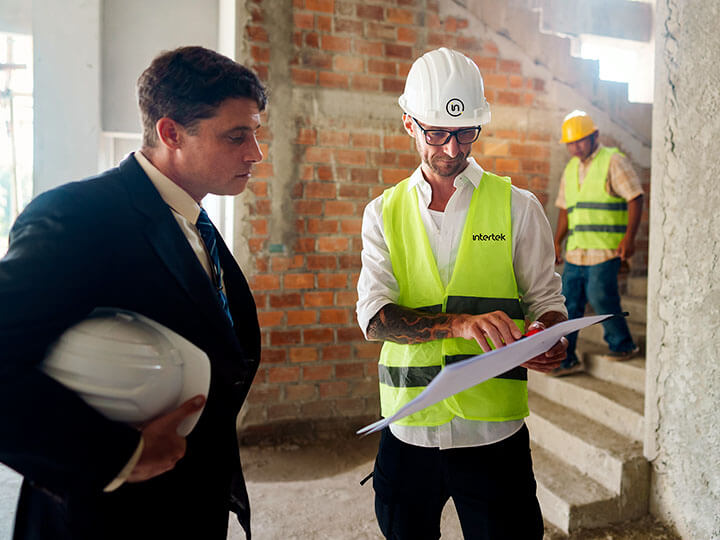
Property Resilience Assessments (PRAs)
Safeguard your property investment against climate risks. Intertek's building resilience services include assessments, consulting, and expertise for new construction and existing buildings.